Chemicaldecontamination
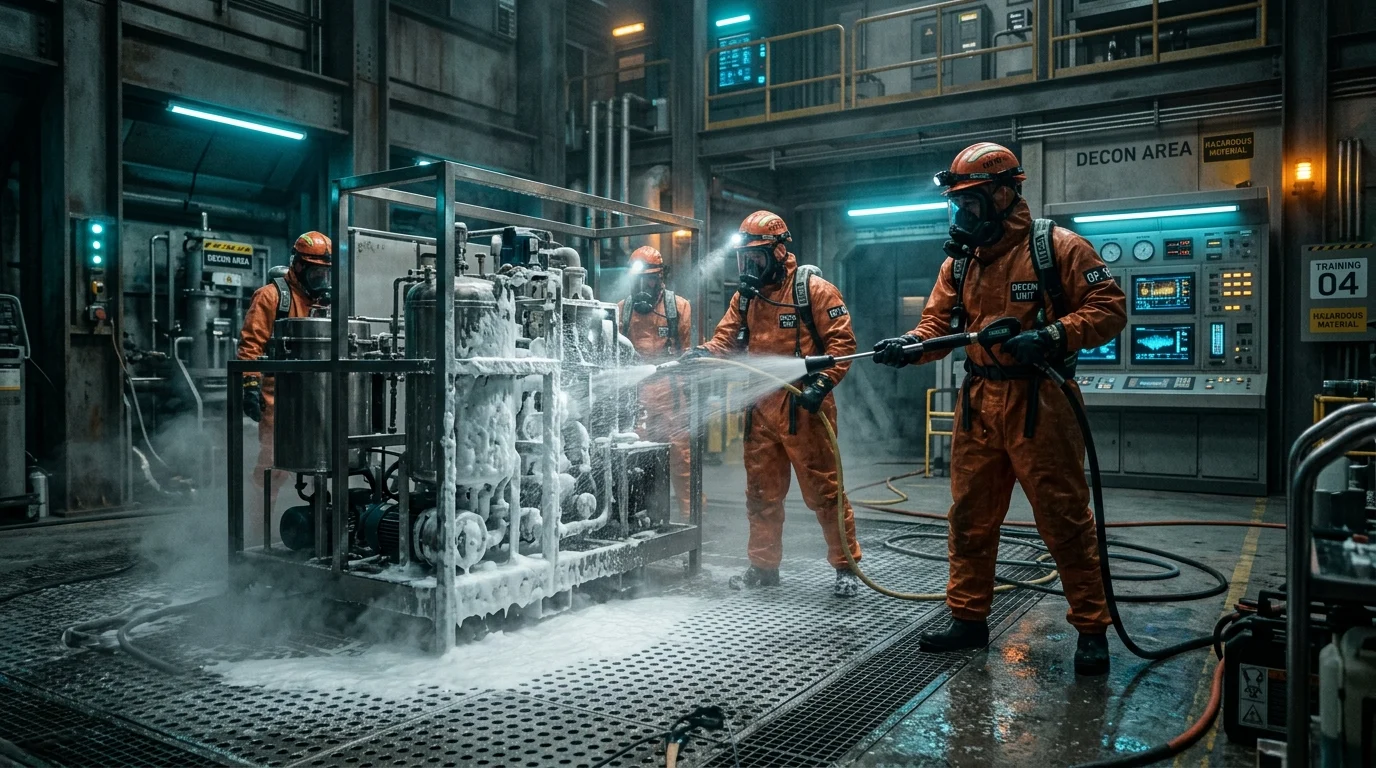
Neutralization drills for persistent nerve and blister agents in VR. Level A/B encapsulated suit protocol, vapor detection monitoring, active foam breakdown physics, and hot-zone sump isolation.
Six steps — Chemical breakdown protocol
Persistent chemical agents penetrate porous seals and seams. Rinsing before complete neutralizer dwell time spreads active toxins into clean drainage.
- 01
Vapor & contact detection
Approach with IMS and photoionization detectors. Map liquid droplet boundaries and identify vapor plumes across contaminated assets.
- 02
Hot zone perimeter containment
Establish physical exclusion boundary downwind. Deploy catch basins and drainage sumps to prevent hazardous chemical runoff migration.
- 03
Active foam neutralizer application
Apply micro-emulsion neutralizing decontaminant from bottom to top. Ensure unbroken, dense foam barrier over vesicant and nerve agent deposits.
- 04
Reaction dwell enforcement
Maintain mandatory reaction contact time. Early wash halts chemical hydrolytic cleavage and leaves active persistent toxin behind.
- 05
Controlled low-pressure washdown
Rinse with low-pressure heated water to strip neutralized reaction products without aerosolizing residual toxins into breathing zones.
- 06
Residual vapor clearance & release
Verify zero detectable vapor with colorimetric detector tickets and electronic sniffer probes before releasing personnel or equipment to the clean line.
Scored on vapor clearance & dwell precision
- Vapor detection mapping
- Neutralizer foam density
- Dwell time compliance
- Runoff containment
- IMS post-wash clearance
 Next bayBIOBiological Containment SystemEnter